








How To Pack a Suit or Dresses in a Suitcase Without Wrinkling
You've invested in a well-cut suit, a formal gown, or a pair of handcrafted dress shoes. Packing that formal wear demands the same care and intention that went into choosing those pieces in the first place. With the right technique and the right luggage, your suit, gown, and dress shoes can travel the same miles you do and arrive in impeccable condition
At Briggs & Riley, we have spent decades studying how discerning travellers pack, and we have built our luggage around the real demands of sophisticated travel. This guide distils that expertise into practical, expert-led techniques to keep your formal attire and high-value accessories arriving in precisely the same condition they left home.
1. Choose the Right Luggage Before You Pack a Single Item
Understanding how to pack formal clothes in a suitcase requires a critical first step. The most skilled packing technique in the world cannot compensate for the wrong piece of luggage. For formal wear, your first decision is the most important one.
Garment bags are the gold standard for suits, blazers, and formal dresses. A dedicated garment bag allows structured pieces to hang or fold flat with minimal stress on seams and fabric. We engineer our garment bags with interior organisation so that ties, pocket squares, and accessories travel alongside your clothing without compromising the garments themselves.
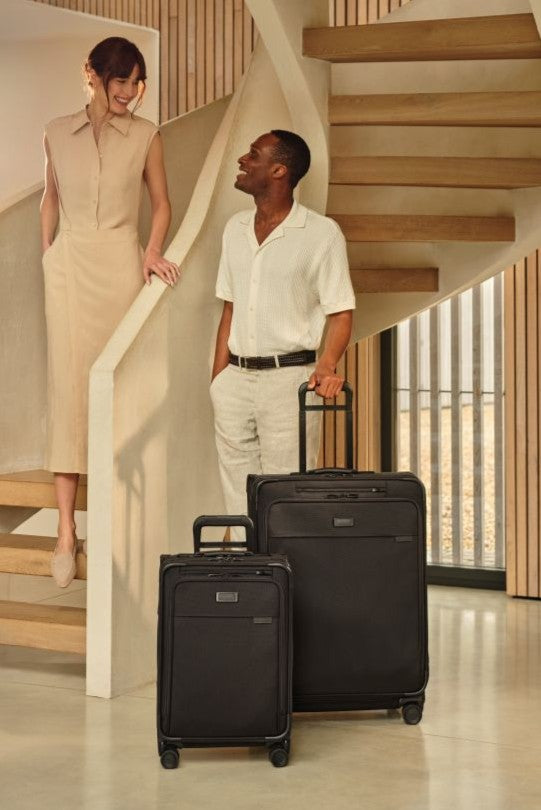
Baseline spinners are another excellent option because they have a built-in suit section in the case lid for carrying a single suit and shirt on short business trips.
Hard-shell suitcases offer a level of structural protection that soft-sided cases simply cannot match. When you are carrying a tailored jacket, a delicate gown, or a pair of leather-soled dress shoes, a hard shell absorbs external pressure rather than transferring it to the contents inside.
Whichever you choose, our lifetime guarantee backs every piece of Briggs & Riley luggage unconditionally, no questions asked, for life.

2. How To Pack a Suit in a Suitcase
This is the question most business travellers ask, and the answer lies in a precise folding method that works with the suit's natural construction rather than against it.
The Inside-Out Jacket Fold
This method protects the outer fabric and uses the lining, a smooth, low-friction surface, to prevent creasing.
- Hold the jacket by the shoulders and turn one shoulder inside out.
- Tuck the opposite shoulder into the inverted one, so the jacket folds in half lengthways with the lining facing outward.
- Fold the jacket in half once more, horizontally, and place it in the suitcase.
For the Trousers
For wrinkle-free packing, you should:
- Lay the trousers flat along the crease line and fold them lengthways.
- Drape them over the jacket, aligning the crease so it stays in place and doesn't flatten at the wrong point.
- If available, pack trousers inside a packing cube to keep them isolated from other items.
Alternative Method
The bundle packing method is an alternative worth knowing. Larger, structured items are wrapped around a central soft core (a rolled jumper or toiletry bag, for example). The tension created minimises the folds that cause deep creases. It requires some practice, but seasoned travellers rely on it for multi-item formal packing.
Key principle: Always place your suit jacket as close to the last item packed as possible. Less time under compression equals fewer creases.

3. How To Pack a Formal Dress in a Suitcase
Knowing how to pack dresses in a suitcase without wrinkling is a crucial skill. Packing a formal dress requires a fabric-first approach. The technique depends on the material.
For structured or beaded gowns: A garment bag is non-negotiable. Fold as little as possible, use tissue paper between layers, and ensure the bag is not overfilled so the dress can settle without pressure.
For lighter fabrics (silk, chiffon, jersey): The roll method is more effective than folding. Rolling reduces the sharp fold lines that cause visible creasing. Place the rolled dress inside a protective bag or a packing cube to keep it contained.
For all formal dresses:
- Fill the bodice with tissue paper or a soft item to hold its shape.
- Pack heavier items below, never on top of, delicate fabrics.
- Shake the dress out gently and hang it immediately upon arrival; most light travel creases will fall out within an hour.
- Use the hotel's steam shower if needed: hang the dress in the bathroom while running hot water for 10 minutes.
The Briggs & Riley garment bag features a dedicated interior layout that accommodates full-length garments alongside accessories, making it the most elegant solution for formal-occasion travel.
4. How To Pack Dress Shoes Properly
Dress shoes are structurally delicate and potentially damaging to other items in your luggage if packed carelessly. Leather soles, polished uppers, and structured heels all require considered handling.
Pack shoes in individual shoe bags. This protects the leather from scuffs and keeps polish or sole residue away from clothing.
Maintain shoe structure during travel by filling each shoe with a small rolled pair of socks, a shoe tree, or a soft item. This prevents the upper from collapsing or creasing across the vamp, the part of the shoe most susceptible to stress damage.

Placement within your suitcase matters. Position shoes at the spine of the suitcase (the wheeled end) so they sit vertically when the case is upright. This distributes their weight naturally and prevents them from pressing against garments throughout the journey.
For dress shoes or other essentials, we offer purpose-built luggage accessories to keep your travel wardrobe protected and in order.
5. Protect High-Value Accessories and Jewellery
Cufflinks, ties, pocket squares, jewellery, and watches are small items with an outsized potential for damage or loss during travel.
- Ties and pocket squares: Roll silk ties loosely rather than folding them. Tight folds will crease the interlining and distort the shape. A dedicated tie case or the accessory pocket of a well-organised garment bag is the proper home for these pieces.
- Cufflinks and small jewellery: A firm-sided accessories case prevents items from shifting, tangling, or scratching. Never pack loose items in an outer pocket where they are vulnerable to impact.
- Watches: Wrap in a soft cloth or a dedicated watch roll. If carrying multiple timepieces, keep them separated to prevent dial scratching.
6. Use Packing Cubes Strategically
Packing cubes are among the most practical tools for organised, wrinkle-conscious packing. They create defined zones within your suitcase, preventing items from shifting during transit, the primary cause of unexpected creases and damage.
Use a flat, slim cube for formal shirts. Pack each shirt face down, with the collar at one end, and fold once. Keeping shirts in a cube keeps them flat and prevents them from migrating against shoes or other rigid items.
A separate cube for casual or day wear keeps your formal pieces isolated from items that are packed and unpacked repeatedly throughout a trip.
7. The Final Check: Packing Order and Luggage Choice
Before closing your suitcase, review the order of packing with a critical eye:
- Heaviest items (shoes in bags, toiletry cases) sit against the spine of the suitcase.
- Mid-weight items (folded trousers, packing cubes with shirts) sit in the centre.
- Lightest, most delicate items (jacket, dress) sit at the top, closest to the opening, and are packed last.
Overpacking is the most common cause of wrinkled clothing on arrival. If you are struggling to close the case, remove something rather than forcing it. A hard-shell suitcase that closes cleanly with room to breathe will protect your formal wear far more effectively than one packed to capacity.
Explore the Art of Travel
Always Enhancing the Travel Experience


Frequently Asked Questions
How do I remove travel creases from a suit or dress on arrival?
Can I pack a suit in a carry-on?
Is a garment bag better than a hard shell suitcase for a suit?
A garment bag is the superior choice for the suit, specifically. It allows the jacket and trousers to hang or fold flat with minimal stress on seams and structure, and a well-designed one includes dedicated compartments for ties, pocket squares, and accessories, so everything travels together without compromising the garments. If your trip is built around a single formal occasion and your other packing is light, a garment bag is the more elegant, focused solution.
Hardside luggage becomes the stronger option when you are travelling for several days, carrying formal and casual clothing together, or checking baggage on a busy route. The rigid shell absorbs external pressure from handling and stacking rather than passing it through to the contents inside, which matters when a tailored jacket or a pair of leather-soled dress shoes is inside.
For longer trips that include a formal occasion, many seasoned travellers use both: a hard shell for the bulk of their packing and a garment bag carried on board to keep the suit entirely out of the hold.
Related Articles


Arrive Ready for Every Occasion
Packing formal wear expertly is a discipline, one that rewards preparation and the right tools. With the correct folding technique, purpose-built luggage, and considered organisation, your suit, gown, and dress shoes can travel the same miles you do and arrive in impeccable condition.
Explore the full range of Briggs & Riley hard-shell suitcases, garment bags, packing cubes, and accessories, all backed by our unconditional lifetime guarantee.